
California Notary Forms and Regulations: Your Friendly Guide to Getting It Right

If you’ve ever needed a document notarized in California, you know it can feel like navigating a maze. But don’t worry! I’m here to walk you through the essentials of California notary forms and regulations with a friendly, no-nonsense approach. Whether you’re a notary yourself or just someone who needs a notarized document, understanding the ins and outs can save you time, money, and a whole lot of headaches.
Let’s dive in and make sense of those official papers and rules that keep everything above board in the Golden State.
What Are California Notary Forms and Why Do They Matter?
First things first: what exactly are these notary forms? Simply put, they are the official documents that a California notary public uses to perform their duties. These forms include acknowledgments, jurats, oaths, and more. Each form serves a specific purpose and must be completed correctly to ensure the notarization is valid.
Why does this matter? Because a notarized document is like a VIP pass in the legal world. It confirms that the signatures on the document are genuine, and the signers acted willingly. This helps prevent fraud and protects everyone involved.
Here are some common types of California notary forms you might encounter:
Acknowledgment: Confirms the signer personally appeared before the notary and acknowledged signing the document.
Jurat: The signer swears or affirms that the contents of the document are true.
Proof of Execution by Subscribing Witness: Used when the signer is not present but a witness can confirm the signature.
Oath or Affirmation: A formal promise to tell the truth or fulfill a duty.
Each form has its own format and requirements, so using the right one is crucial.
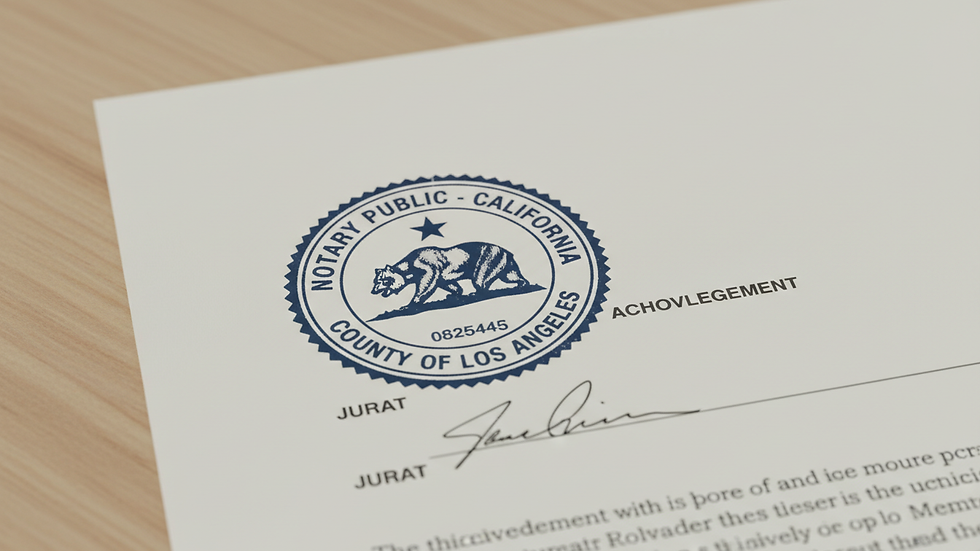
Navigating California Notary Forms: What You Need to Know
If you’re a notary or someone preparing documents for notarization, understanding the specific requirements for California notary forms is key. The state has strict rules to ensure everything is done properly.
Here are some practical tips to keep in mind:
Use the Correct Form: Don’t mix up acknowledgments with jurats. Each serves a different legal function.
Complete All Required Fields: Missing information can invalidate the notarization.
Verify Signer Identity: California law requires the notary to confirm the signer’s identity using acceptable ID forms like a driver’s license or passport.
Record the Notarization: Notaries must keep a journal of all notarizations performed, including details like date, type of document, and signer information.
Use the Official Notary Seal: The seal must be clear and legible, showing the notary’s name, commission number, and expiration date.
If you want to get your hands on the official notary forms california uses, the Secretary of State’s website is the best place to start. They provide downloadable, up-to-date forms that comply with current laws.
Remember, a small mistake on a form can cause big delays. Think of it like baking a cake - if you forget the baking powder, the whole thing falls flat!
Can You Notarize Documents Online in California?
Here’s a question I get asked a lot: Can you notarize documents online in California? The short answer is yes, but with some important caveats.
California has embraced remote online notarization (RON) under specific conditions. This means you can have your documents notarized via video conference without being physically present with the notary. It’s a game-changer, especially in today’s digital world.
However, not every notary is authorized to perform online notarizations. They must complete special training and obtain a RON commission. Plus, the technology used must meet strict security standards to verify identity and record the session.
Here’s what you need to know if you want to go the online route:
Choose a RON-commissioned notary: Not all notaries offer this service.
Prepare your documents digitally: You’ll need electronic versions of your forms.
Have valid ID ready: The notary will verify your identity through multi-factor authentication.
Expect a recorded session: The entire notarization is recorded and stored securely.
Online notarization is convenient, but it’s not suitable for every situation. Some documents, like certain real estate transactions, may still require in-person notarization.

Common Mistakes to Avoid When Using California Notary Forms
Let’s be honest - paperwork can be tricky. Even seasoned pros slip up sometimes. To help you avoid common pitfalls, here’s a quick checklist of mistakes to watch out for:
Incomplete or Incorrect Forms: Using outdated or wrong forms can invalidate the notarization.
Not Verifying Signer Identity Properly: Always check government-issued ID carefully.
Not Recording the Notarization: California law requires a journal entry for every notarization.
Improper Use of Notary Seal: The seal must be clear and include all required information.
Not Signing or Dating the Certificate: The notary’s signature and commission expiration date are essential.
If you’re a signer, don’t sign the document before meeting the notary unless instructed otherwise. The notary needs to witness your signature to make it official.
Tips for Notaries: Staying Compliant and Confident
If you’re a California notary, you know the responsibility is real. Here are some tips to keep your practice smooth and compliant:
Stay Updated: Laws and regulations can change. Regularly check the California Secretary of State’s website for updates.
Keep Your Journal Neat: A well-maintained journal can protect you if questions arise later.
Use Quality Supplies: Invest in a durable seal and reliable stamp.
Educate Your Clients: Explain the process clearly to avoid confusion.
Practice Good Communication: Friendly, clear instructions go a long way.
By following these tips, you’ll build trust and avoid common headaches.
Wrapping It Up: Your Next Steps with California Notary Forms
So, what’s the takeaway? Whether you’re notarizing a power of attorney, a real estate document, or a simple affidavit, understanding California notary forms and regulations is your secret weapon. It’s like having a map in a tricky forest - it guides you safely to your destination.
If you’re preparing documents, double-check the forms and requirements. If you’re a notary, keep your skills sharp and your paperwork flawless. And if you’re curious about online notarization, explore the options but know the rules.
Remember, the right form, the right process, and a little attention to detail make all the difference. Now, go forth and notarize with confidence!
If you want to explore official resources or download forms, check out the notary forms california page for the latest and greatest.
Happy notarizing!


Comments